
Feast of Home: Knowing the Landscape That Feeds Us
What would it look like to truly know the landscape that feeds us?
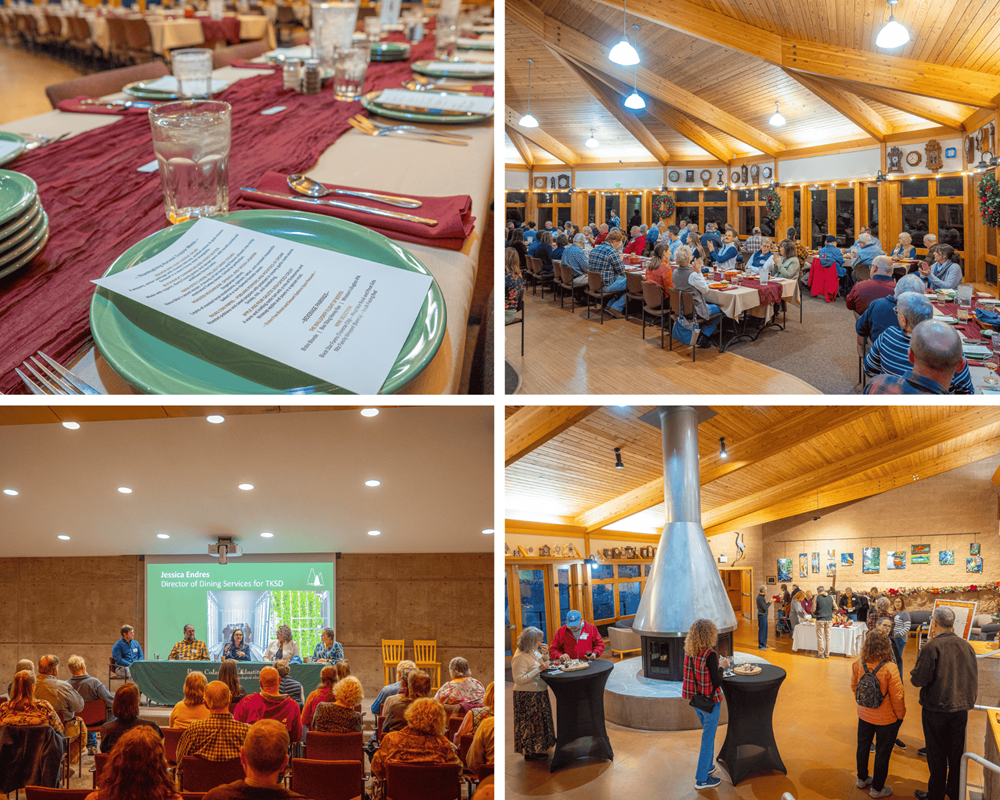
That question is at the heart of Feast of Home, a growing Pierce Cedar Creek Institute tradition that brings people together around one of the most universal things we share: food.
Launched in fall 2025 as a partnership between Pierce Cedar Creek Institute, Michigan Agriculture Advancement (MiAA), and B. Healthy Barry County, Feast of Home combines a locally and regionally inspired meal with storytelling, education, and conversation about the landscapes and systems that feed our communities.
The meal is important, but it is really just the starting point.
Food connects us to farmers, soil, water, health, culture, businesses, communities, and one another. Feast of Home was created as a way for people to actually taste those connections, while gathering around a table to consider what it takes to create a thriving food system that supports farmers, nourishes communities, and cares for the environment.
It Started Close to Home
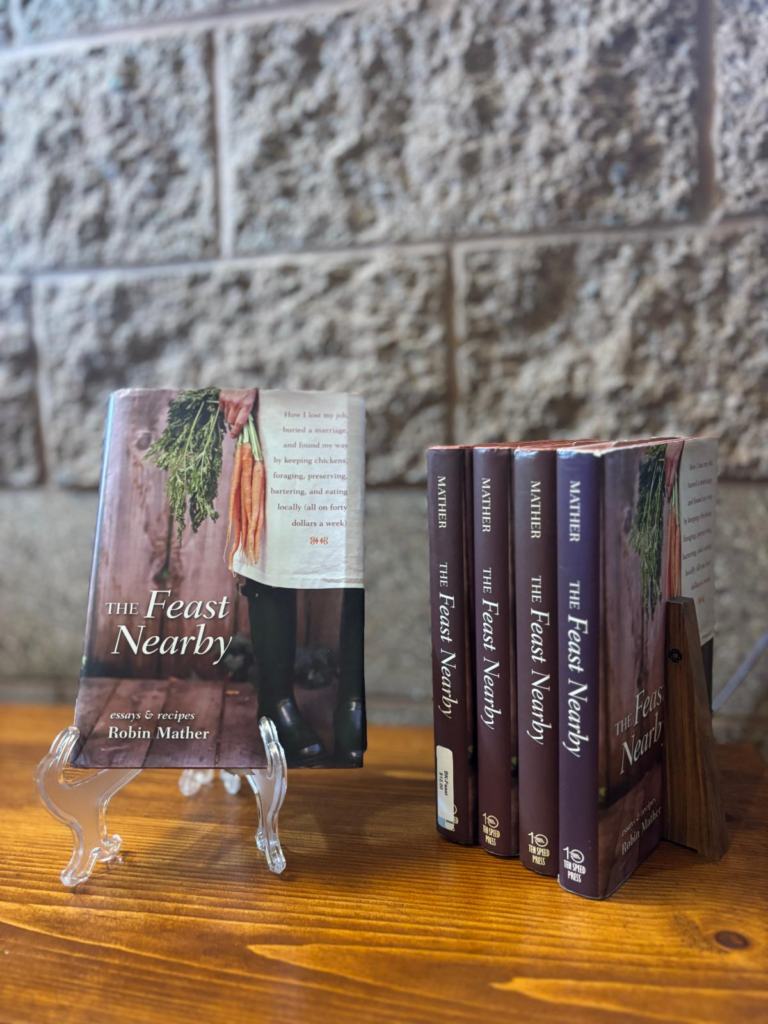
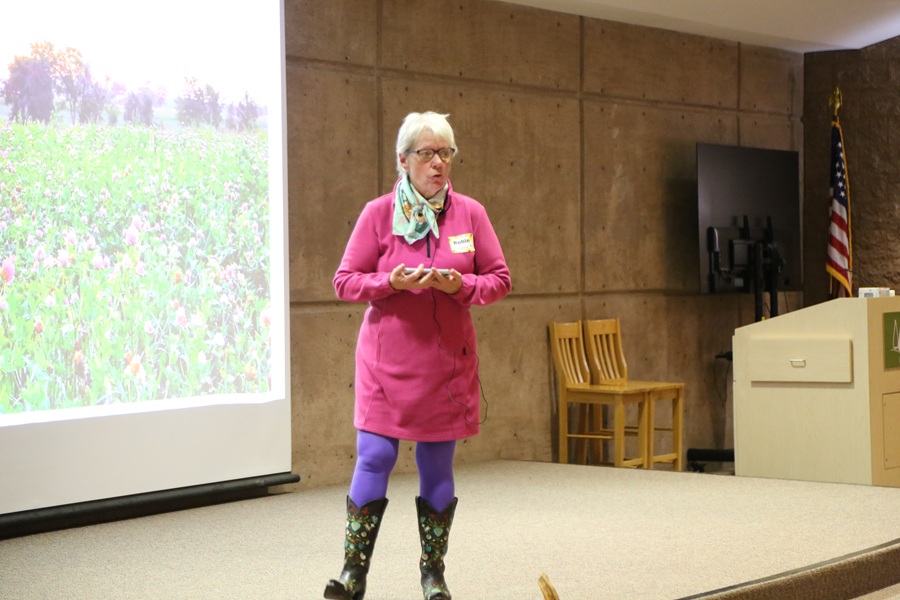
Our first Feast of Home began in October 2025 with author Robin Mather and her book The Feast Nearby.
The book chronicles a year Mather spent living here in Barry County in 2009, challenging herself to eat locally and seasonally while living on a limited food budget. Her experience offered the perfect starting point for our conversation because it made “eating local” tangible. It wasn’t an abstract ideal. It was shaped by season, availability, relationships, creativity, and cost.
Our kitchen embraced that same challenge.
Across two Feast of Home gatherings that fall, we sourced food and beverages from more than 24 farmers and producers located within approximately 40 miles of Pierce Cedar Creek Institute. Doing so became an education in itself.
It required phone calls and relationships. Driving and deliveries. Coordinating with harvests. Changing recipes according to what was actually available. And occasionally reaching a little farther when a crop didn’t come through as expected.
In the process, we discovered both the extraordinary abundance of our region and some of the real challenges involved in building a truly local food system.
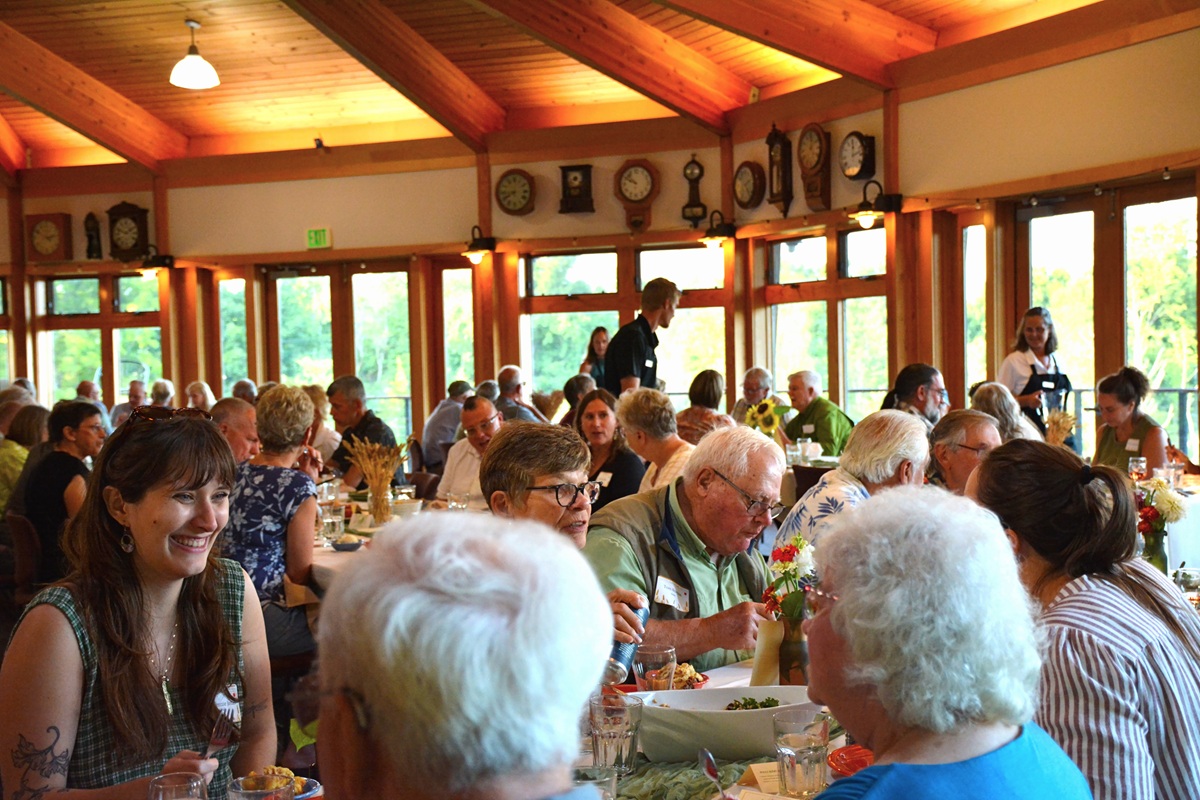
The meal itself became something of a map of our local food system.
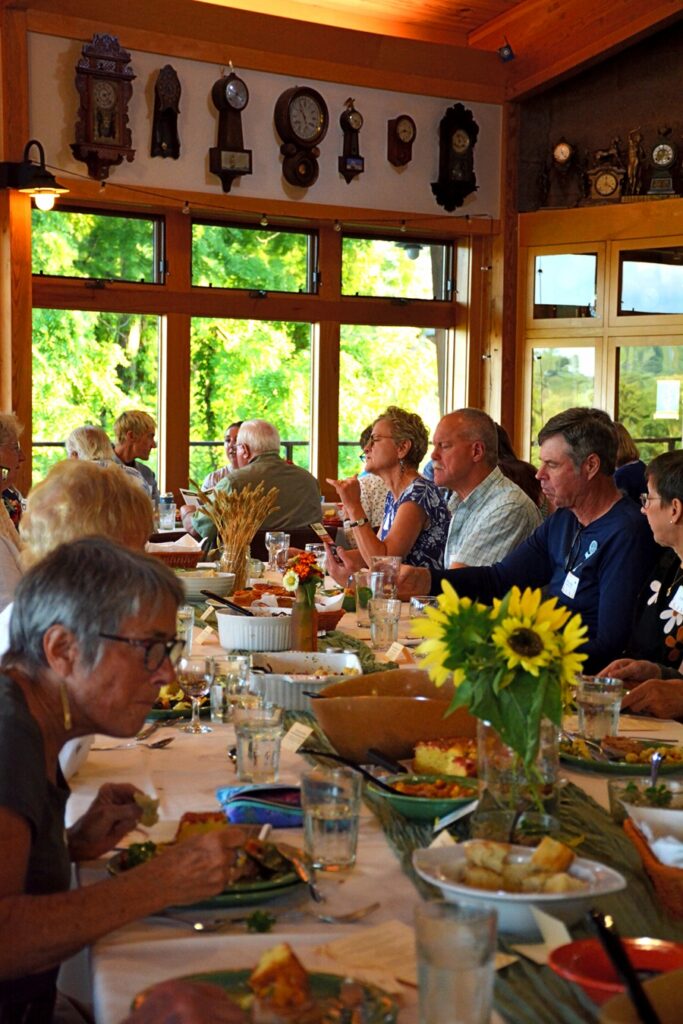
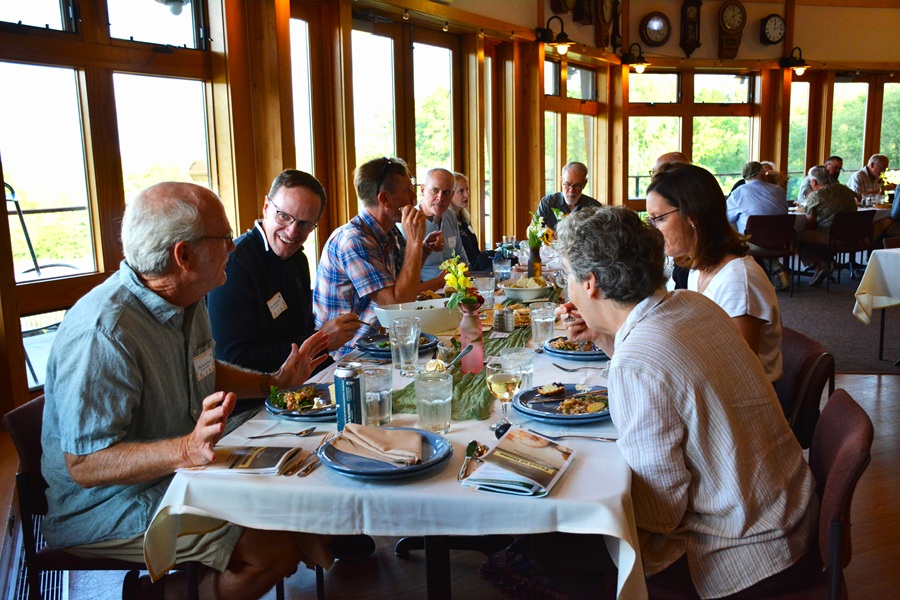
Guests passed bowls family-style, tried unfamiliar ingredients and combinations, met people involved in producing their food, and began asking questions:
Where did this come from? Who grew it? Can I get the recipe?
That curiosity was exactly what we hoped Feast of Home would create.
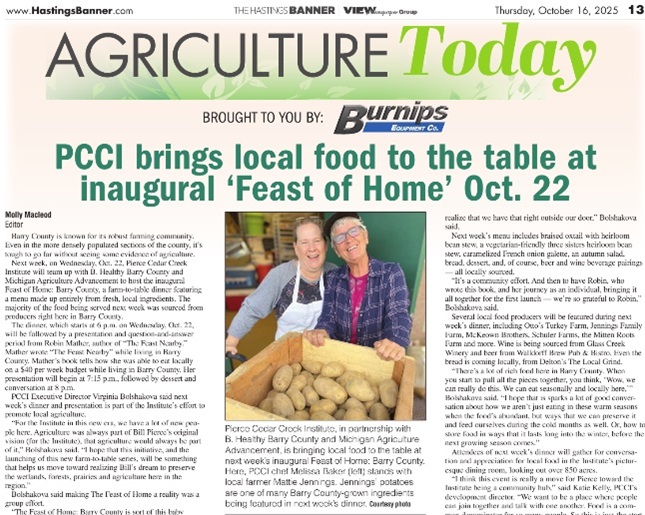
PCCI Assistant Chef Melissa Baker and farmer Mattie Jennings grace the cover of the Banner’s inaugural Agriculture Feature on October 16, 2025, highlighting the first Feast of Home as they hand off locally grown organic potatoes from field to kitchen.
From the Meal to the Food System
For our second gathering in November 2025, we took the next step.
If we wanted more locally grown food on our tables, what would actually have to happen to make that possible?
We brought together people occupying very different places within Barry County’s food system.
A seventh-generation farmer, Nick Otto of Otto’s Turkey Farm, offered the perspective of producing food at a larger scale. Joshua Shultz of Mitten Roots Farm shared a different view from a smaller permaculture operation growing produce for local farmers markets. Jessica Endres, Dining Services Director for Thornapple Kellogg Schools, brought the institutional perspective, sharing what it takes to feed thousands of students while incorporating locally grown food and engaging students in the process. And Allison Hinton, Executive Director of the Mill Street Market, shared what it means to build a local food hub from the ground up in Hastings, creating new connections between producers and the community.
Suddenly, “local food” wasn’t simply about finding a nearby farmer.
It was about relationships, markets, processing, distribution, institutions, infrastructure, and people willing to buy and eat what our landscape produces.
That realization helped shape where Feast of Home would go next.
From Watershed to Grainshed
For our second annual Feast of Home in August 2026, we widened the lens again.
At Pierce Cedar Creek Institute, we spend a great deal of time helping people understand watersheds.
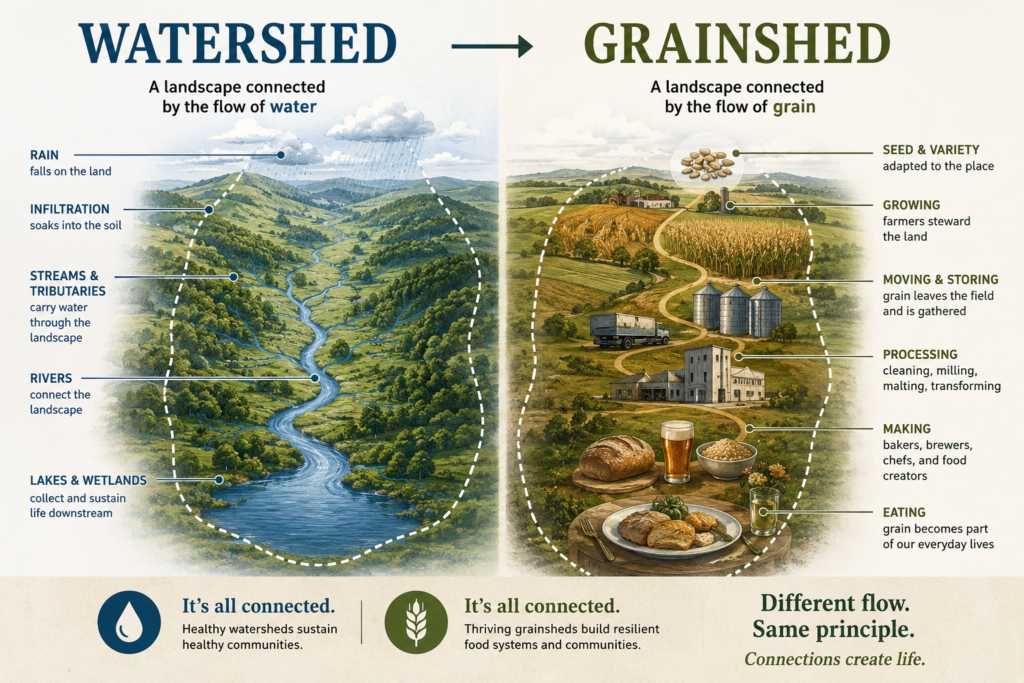
A watershed is a landscape connected by the movement of water. Rain falling on forests and farm fields moves through soils, wetlands, streams, lakes, and rivers. What happens in one part of that landscape ultimately influences another.
For Feast of Home, we introduced guests to a parallel idea:
The grainshed.
Instead of asking, “Where does our water flow?”, a grainshed asks us to consider: “Where does our grain flow?”
Grain begins with seeds, cultivars, soil, water, ecology, and farmers. But the journey doesn’t stop at the edge of the field.
It must be harvested, cleaned, stored, transported, milled or malted, marketed, baked, brewed, cooked, purchased, and ultimately eaten.
A thriving grainshed, then, isn’t simply a place where grain grows.
It is a network of relationships connecting the landscape to our tables.
And just as a watershed doesn’t stop at the Barry County line, neither does a grainshed.
That distinction allowed Feast of Home to evolve from a conversation about local food toward one about a regional food system.
Following the Grain From Field to Table
To explore that system, our 2026 panel followed grain through its journey from field to table.
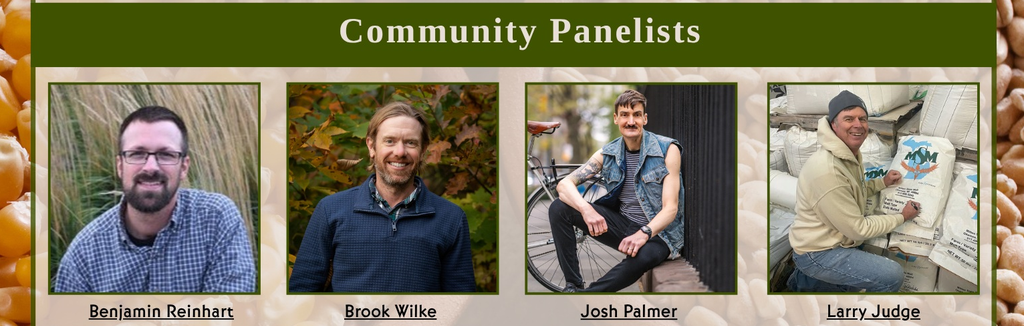
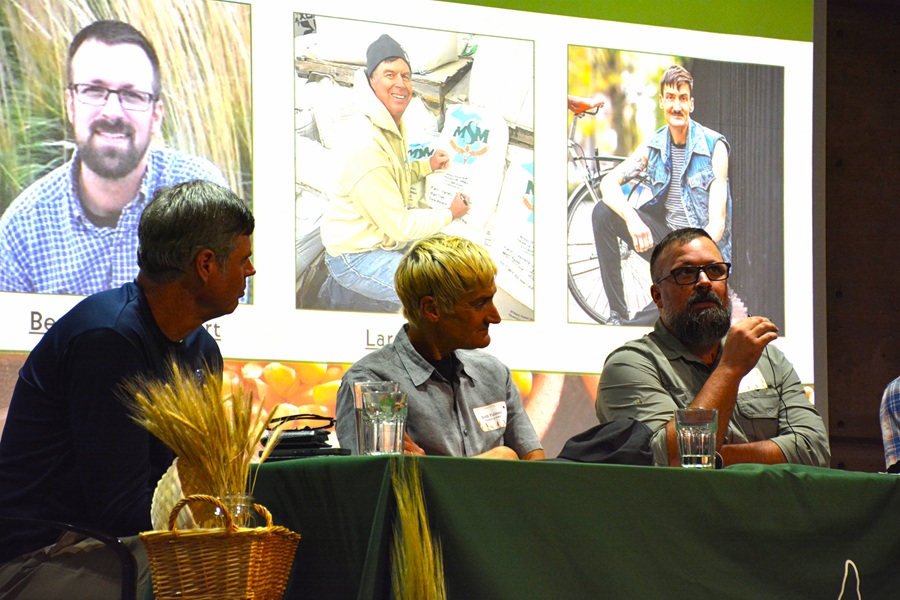
Dr. Brook Wilke, an agroecologist and researcher with Michigan State University’s Kellogg Biological Station, helped us begin with the foundations: seeds and cultivars, cropping systems, soil, water, and ecology.
Benjamin Reinhart of Firefly Fields brought the farmer’s perspective, working at the intersection of growing organic grain and finding markets for what the land produces.
Larry Judge of Mitten State Malt represented a piece of the food system that consumers may rarely see: the processing infrastructure that transforms locally grown grain into an ingredient another business can actually use.
And Josh Palmer of Upstart Bakery brought us to the table, where grain becomes bread and the work of everyone upstream becomes something we can hold, taste, and share.
Together, they helped us explore one overarching question:
What does it take to build a thriving, resilient regional grainshed, from field to table?
And Then We Ate It
One of the principles behind Feast of Home is that we don’t only want people to hear about a food system.
We want them to experience it.
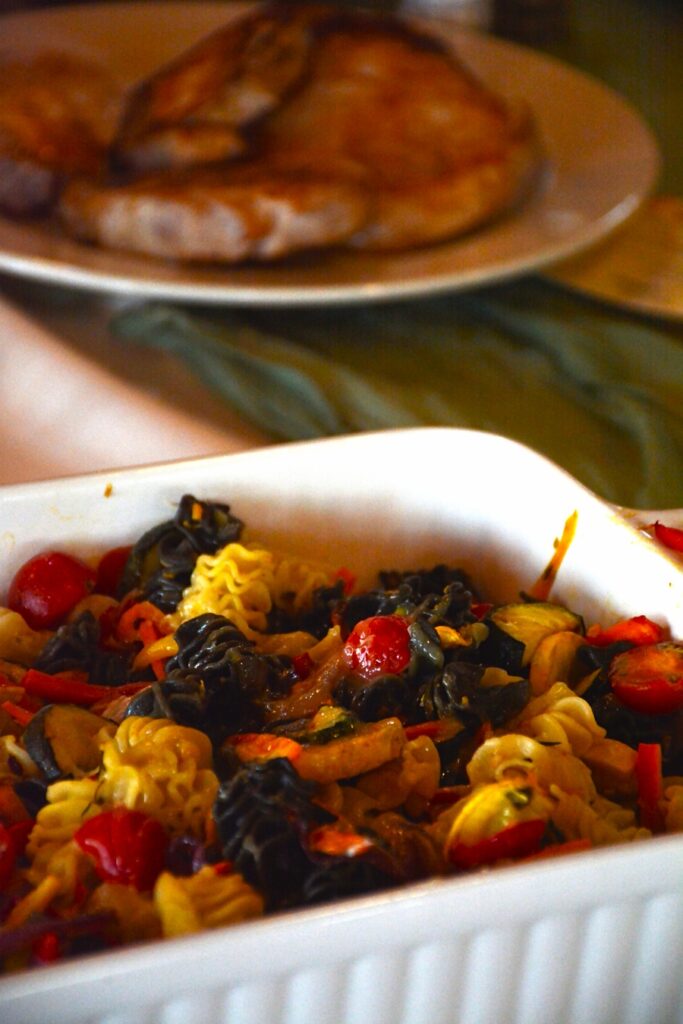
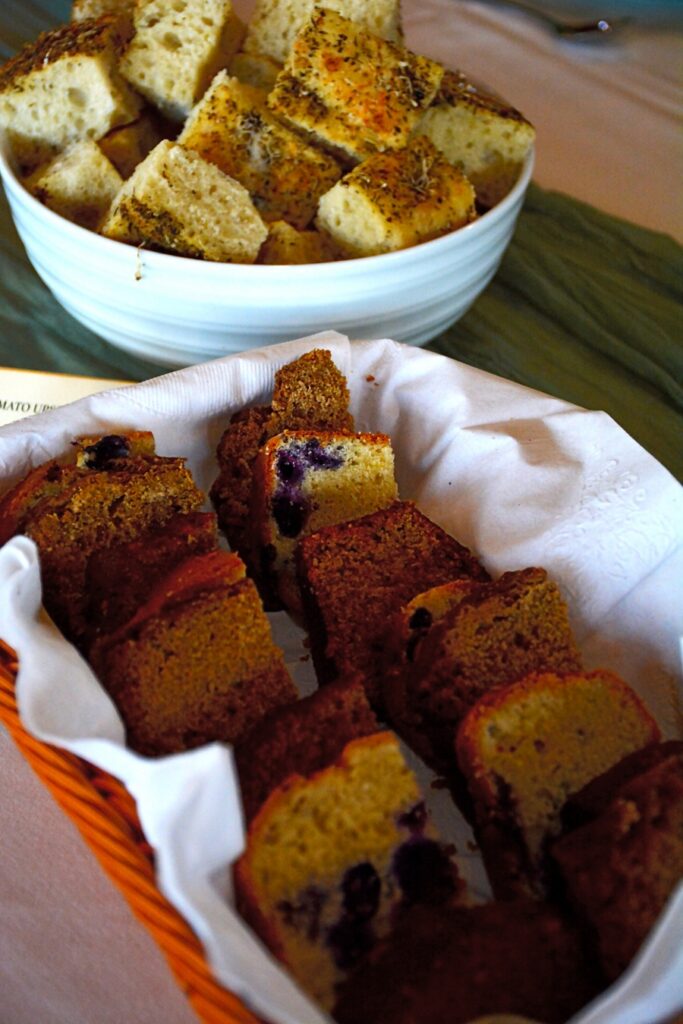
The 2026 Feast showcased regional grains and seasonal ingredients throughout the meal, including a Harvest Farro Salad with a bright vinaigrette, along with other dishes prepared by PCCI’s kitchen team.
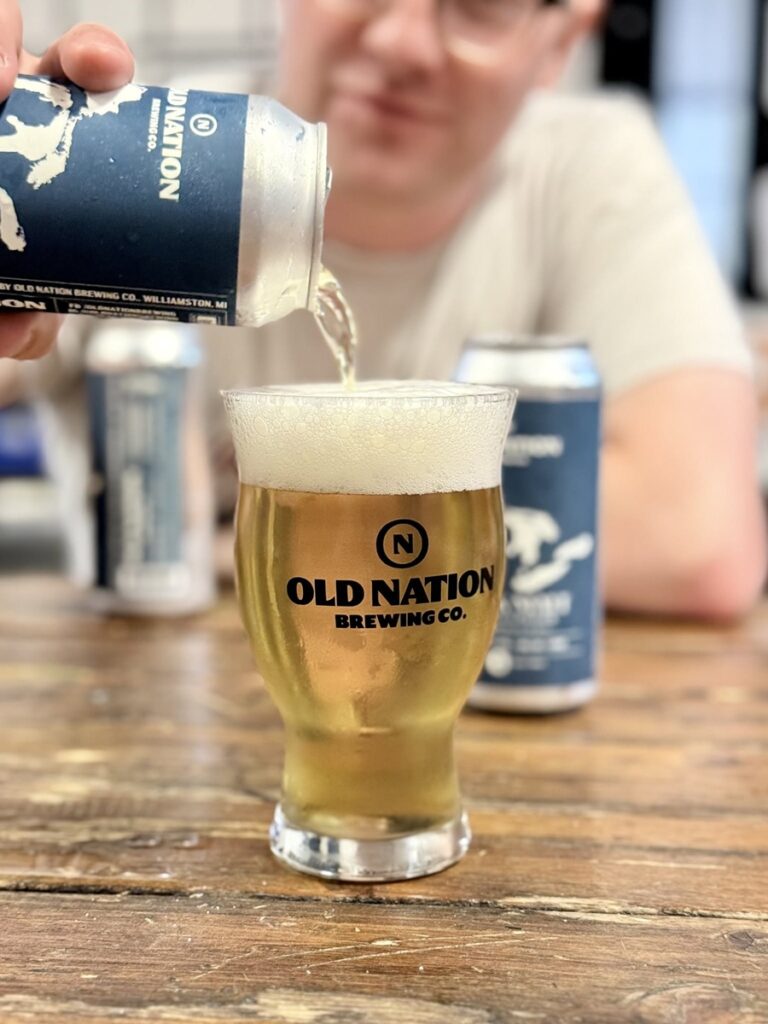
Guests could also enjoy a limited Mitten Made Pilsner from Old Nation Brewing Co., featuring malt from Mitten State Malt and made with Michigan-grown ingredients. It offered a particularly tangible demonstration of the evening’s subject: Michigan grain moving through a regional network of growers, processors, makers, and ultimately into someone’s glass.
Everyone in the room had already participated in the grainshed before our panel discussion even began.
How Local Is Local?
That led to one of the more interesting questions of the evening: What do we actually mean by “local”?
There is enormous value in knowing the farmer down the road. But food systems don’t organize themselves according to county boundaries. A grain may be grown in one Michigan county, cleaned or malted in another, transformed by a baker or brewer somewhere else, and eventually find its way onto a table back in our community.
So perhaps the question isn’t always: “Can we buy something local?”
A more useful question might be: Do we have the relationships and infrastructure necessary for food grown here to stay here and become part of everyday life here?
Our panel explored what makes that difficult and what makes them hopeful. What cultivars are suited to Michigan’s climate and soils? What makes food-grade grain economically viable for farmers? Where are the gaps in storage, transportation, milling, malting, and processing? Can regional producers achieve the consistency and volume that bakers, brewers, schools, restaurants, and institutions need? And perhaps most importantly, is there enough demand from eaters to sustain the entire system?
These are agricultural questions, but they are also ecological, economic, cultural, and community questions.
What If We Got It Right?
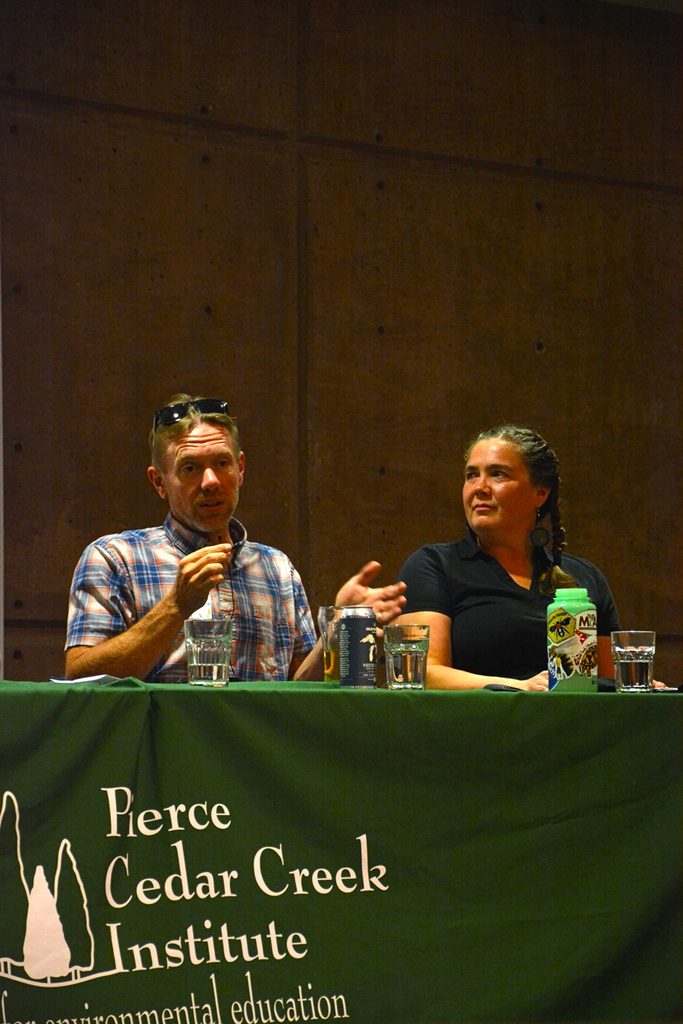
Because PCCI is celebrating its 25th anniversary in 2026, we asked our panelists to look 25 years into the future. Imagine it is 2051, and we have succeeded in creating a thriving, resilient regional grainshed.
What has changed?
Perhaps farmers have more viable markets and greater opportunities to diversify their operations.
Perhaps more diverse crop rotations are contributing to healthier soils, improved water quality, biodiversity, and agricultural resilience.
Perhaps Michigan has more of the middle-scale infrastructure needed to clean, store, mill, malt, process, and distribute what our farms produce.
Perhaps new businesses have emerged.
Perhaps schools, restaurants, breweries, bakeries, and institutions routinely purchase regional ingredients.
And perhaps eaters understand that they, too, have a place in this system.
You don’t have to be a farmer to participate in a grainshed.
Every time we decide what to purchase, cook, serve, or support, we participate in our food system.
Why Gather Around a Table
That may be one of the most important lessons from the first two years of Feast of Home. There is something powerful about learning this way.
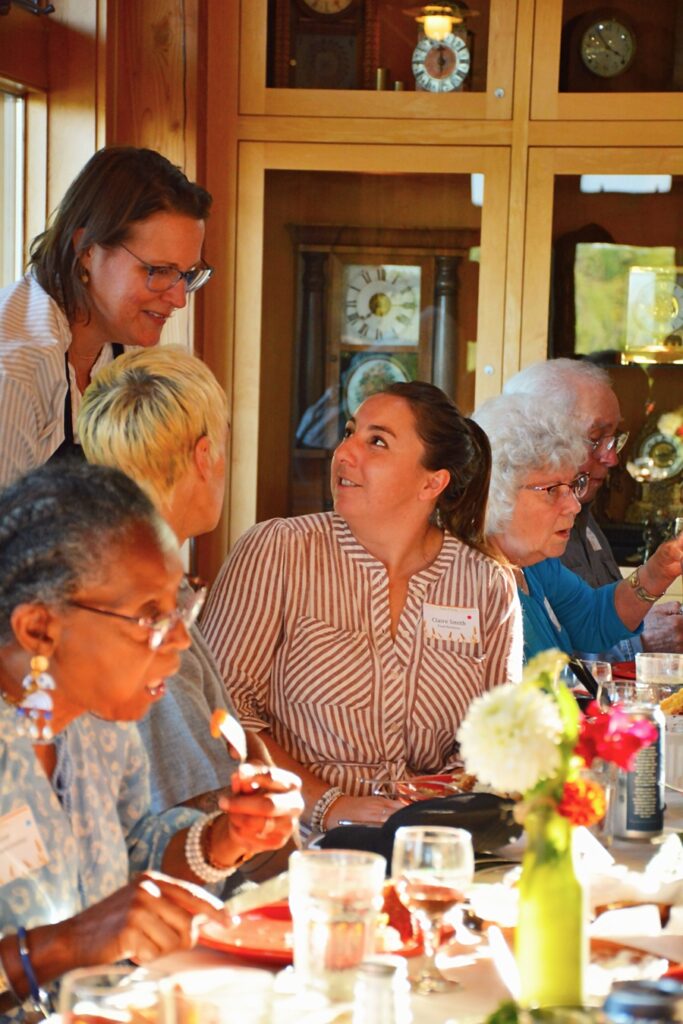
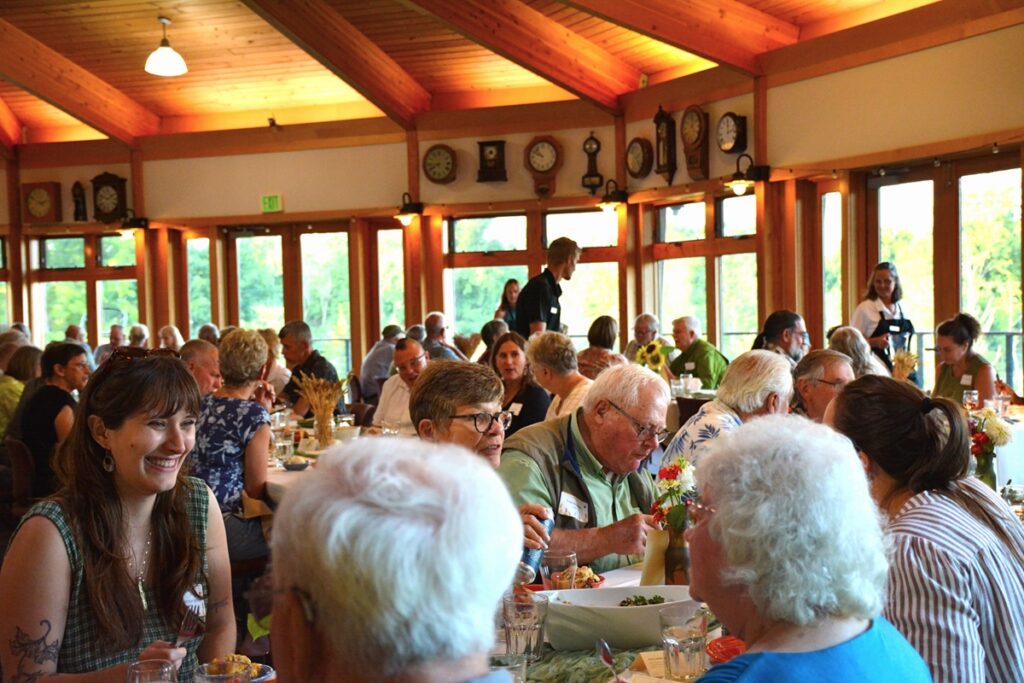
People aren’t sitting in rows listening to a lecture. They’re passing bowls of food. They’re tasting an ingredient someone in the room may have grown, processed, milled, malted, or baked. They’re talking with their neighbors. And then they’re hearing directly from the people trying to build these systems.
At the conclusion of this year’s panel, the formal Q&A ended, but the conversation didn’t. Guests gathered around the panelists to continue asking questions and exchanging ideas.
That is part of the purpose.
PCCI doesn’t need to have all the answers about the future of our regional food system. But as a place devoted to understanding and caring for landscapes, we can help convene the people who hold different pieces of the answer.
Researchers and farmers.
Businesses and institutions.
Conservationists and educators.
Cooks and eaters.
Feast of Home gives those people a table around which to meet one another, learn together, and imagine what might be possible.
The Genius of the Place
Near the conclusion of our 2026 conversation, we returned to a quotation Brook Wilke had shared while preparing for the panel.
Wendell Berry wrote:
“The ecological principle in agriculture, by contrast, is to consult with the genius of the place, to fit the farming to the farm.”
The genius of the place.
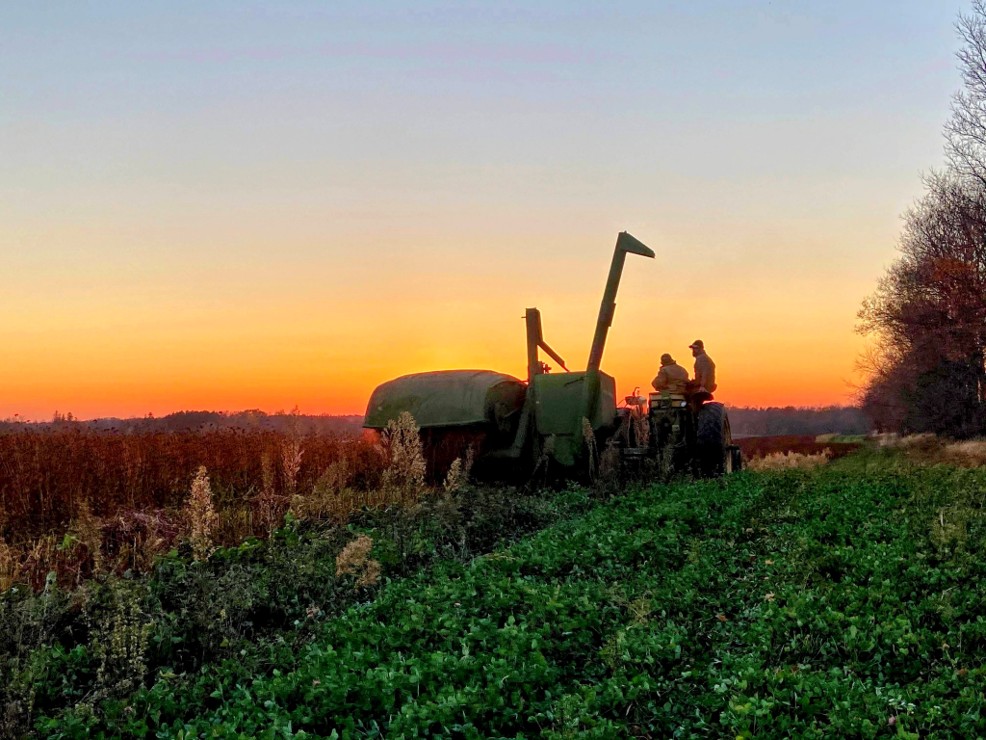
Perhaps those words capture where Feast of Home is heading. Building a resilient regional food system isn’t simply about producing more food nearby. It means paying attention.
What do our soils grow well? What does our climate allow? What have generations of farmers learned about this landscape? What ecological systems need to remain healthy? What infrastructure belongs here? What foods and businesses could emerge from those conditions? And how might the choices we make as eaters help sustain them?
Those questions sit naturally alongside PCCI’s work of helping people understand the relationships among wild lands, working lands, water, communities, and people.
Feast of Home began with a simple idea: gather people around a table and explore where our food comes from.
Where it goes next will continue to be shaped by our farmers, partners, businesses, researchers, cooks, eaters, and community. But perhaps its purpose can be expressed simply:
To know the landscape that feeds us, we first have to learn to see the connections within it.
And then, together, we can begin imagining how to recognize, support, and invest in the genius of our place.