
When the Wind Blows: Third Graders Take on Extreme Weather Engineering
In recent weeks, severe storms have moved through our region, bringing high winds, heavy rain, and even tornadoes. For many in Barry County, these events are not abstract. They are real and powerful reminders of nature’s force.
At Pierce Cedar Creek Institute, third graders are not just learning about these storms. They are learning how to respond to them.
Through the ScienceStrong Program, students step into the role of engineers. They design, build, test, and improve structures that can withstand extreme weather.
Learning from the Real World
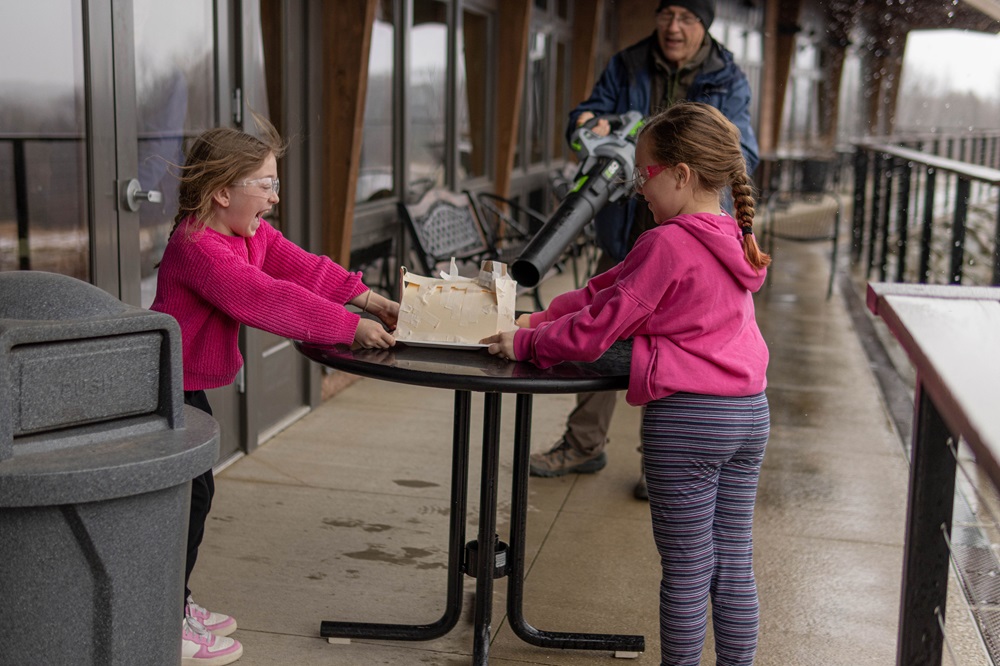
The day begins with a simple but powerful question:
Can we build a house that can resist high winds?
Students explore the types of severe weather that impact Michigan, including tornadoes, thunderstorms, blizzards, hail, and high winds. They watch a modern take on The Three Little Pigs and begin thinking about structure, materials, and design.
Quickly, the focus shifts from weather to real-world problem-solving.
Aligned with Michigan Science Standards, students define a problem, develop a solution, and test whether it works
From Ideas to Engineering
Working in teams, students begin by sketching their designs.
Each structure must meet specific criteria:
- A working front door
- Two windows
- A structure that fits within testing conditions
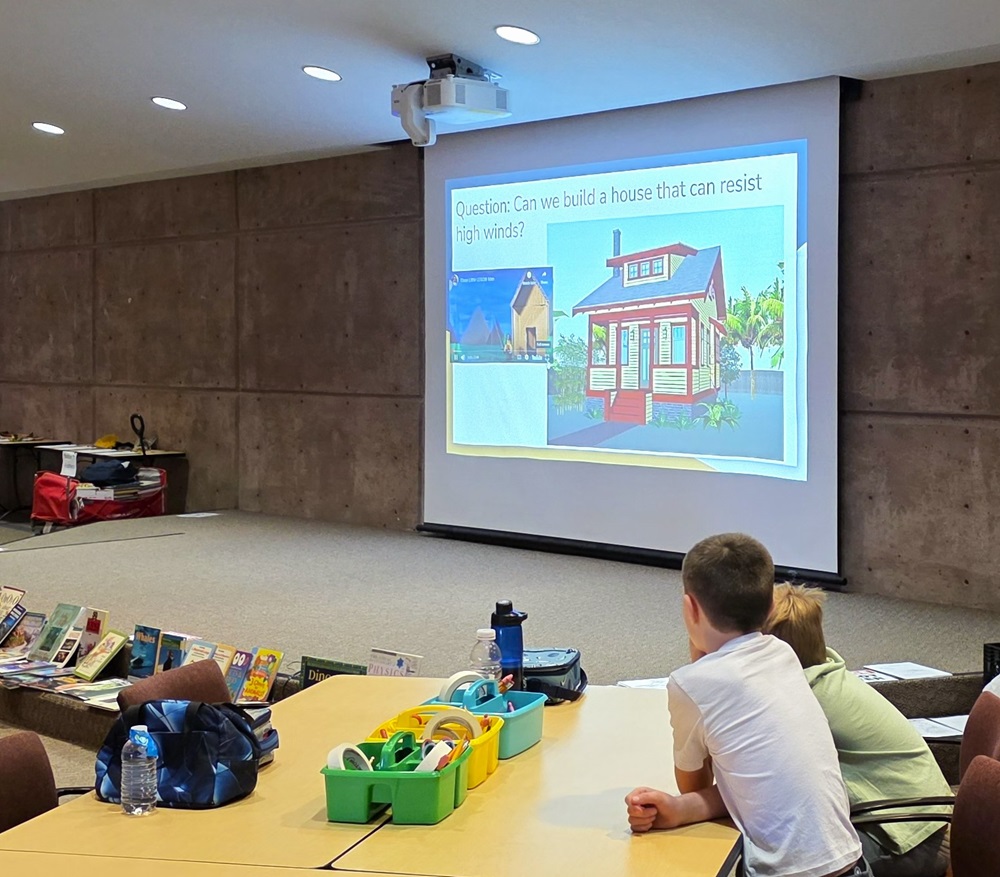
Using simple materials such as manila folders, cardboard tubes, paper plates, and tape, students turn their ideas into physical models.
What begins as a drawing quickly becomes something real. Hands move, tape sticks, voices collaborate, and designs evolve.
Testing the Limits
Then comes the moment of truth.
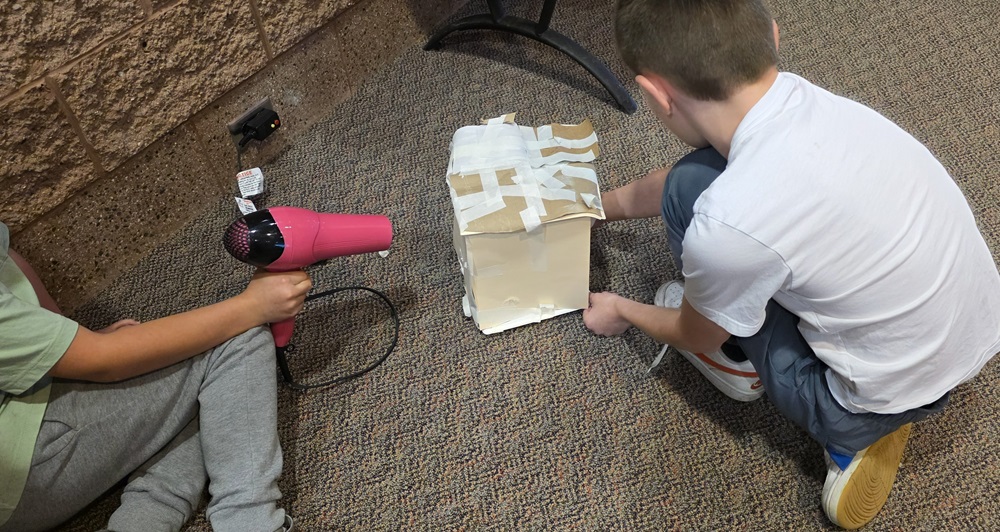
Each structure is first tested with a hair dryer, simulating moderate wind conditions.
Some hold. Some wobble. Some fail completely.
That is exactly the point.
Students observe what works and what does not, then return to their designs to make improvements. This cycle of testing and redesign is at the heart of engineering.
Into the Wind Tunnel
For those that pass the first test, the challenge becomes more intense.
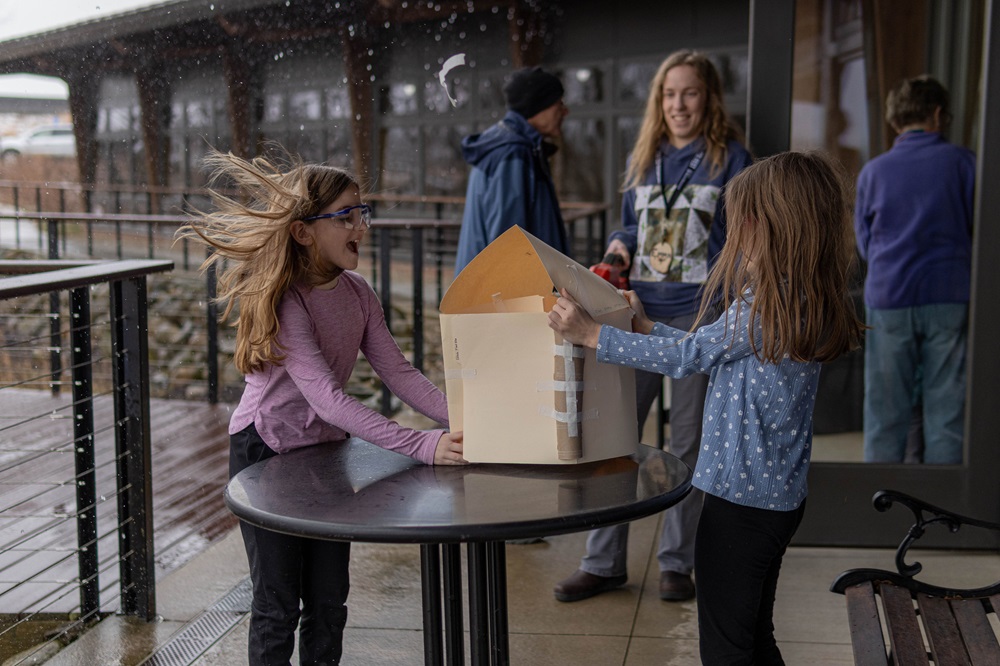
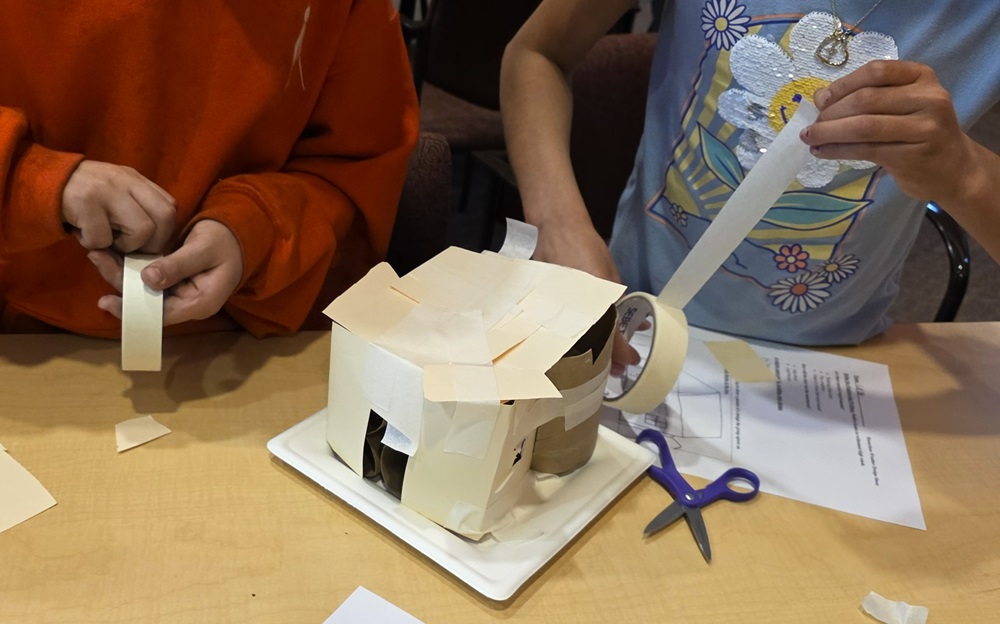
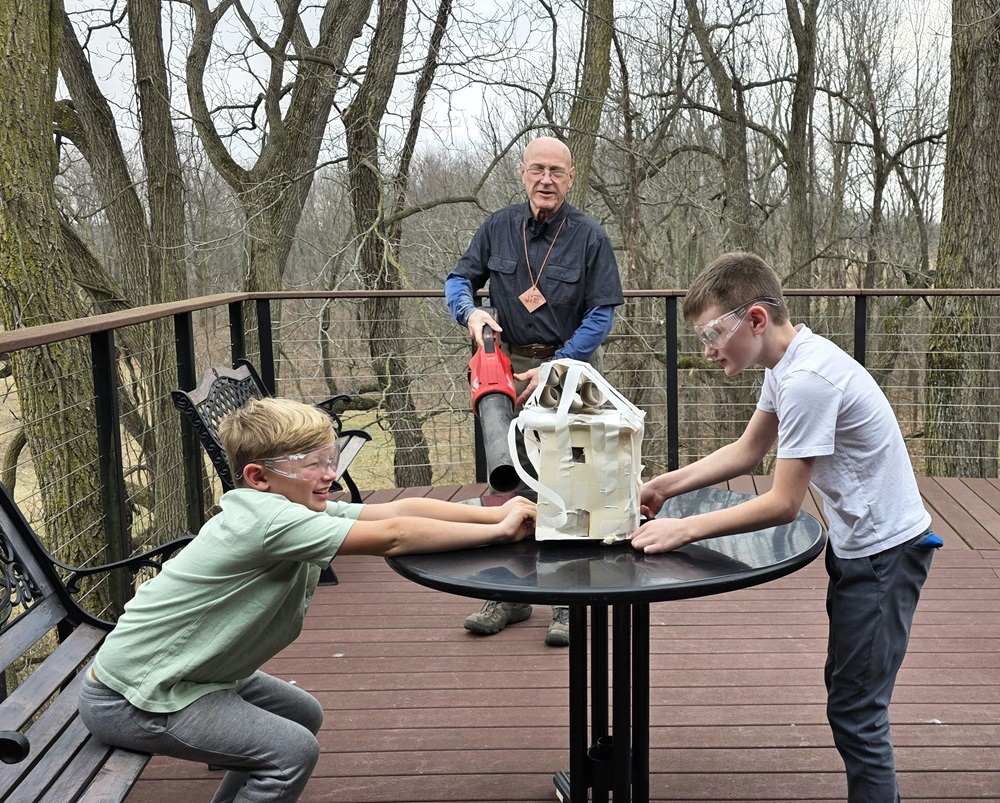
With safety goggles on, students face the wind tunnel test using a leaf blower to simulate high winds.
The structures are pushed to their limits.
Some collapse. Others hold strong.
Students begin to understand that design choices matter. Weight matters. Shape matters. Teamwork matters. Failure becomes part of the learning process.
Try Again. Build Better.
When a structure fails, students do not stop.
They return to their workstation, rethink their approach, and build again.
This is the moment it shifts. Students move from building to thinking like engineers.
A Moment of Accomplishment
When a structure withstands the wind, the pride is unmistakable.
Behind every cardboard model is a student who has worked through a challenge, collaborated with a partner, and discovered a solution.
Building for the Future
In a world where extreme weather events are becoming more frequent and more intense, experiences like this matter.
Students begin to see that buildings are designed with purpose. They are tested, improved, and refined.
They also begin to see themselves as active participants in that process.
As builders.
As engineers.
As problem-solvers.
At Pierce Cedar Creek Institute, ScienceStrong helps students build real-world skills. They help the next generation take on real challenges with curiosity, creativity, and confidence.
Photo & Field Note Credit
The majority of photos and field notes were generously shared by volunteer Amy Seymour.
Nature Awaits
Come see us on the trails.